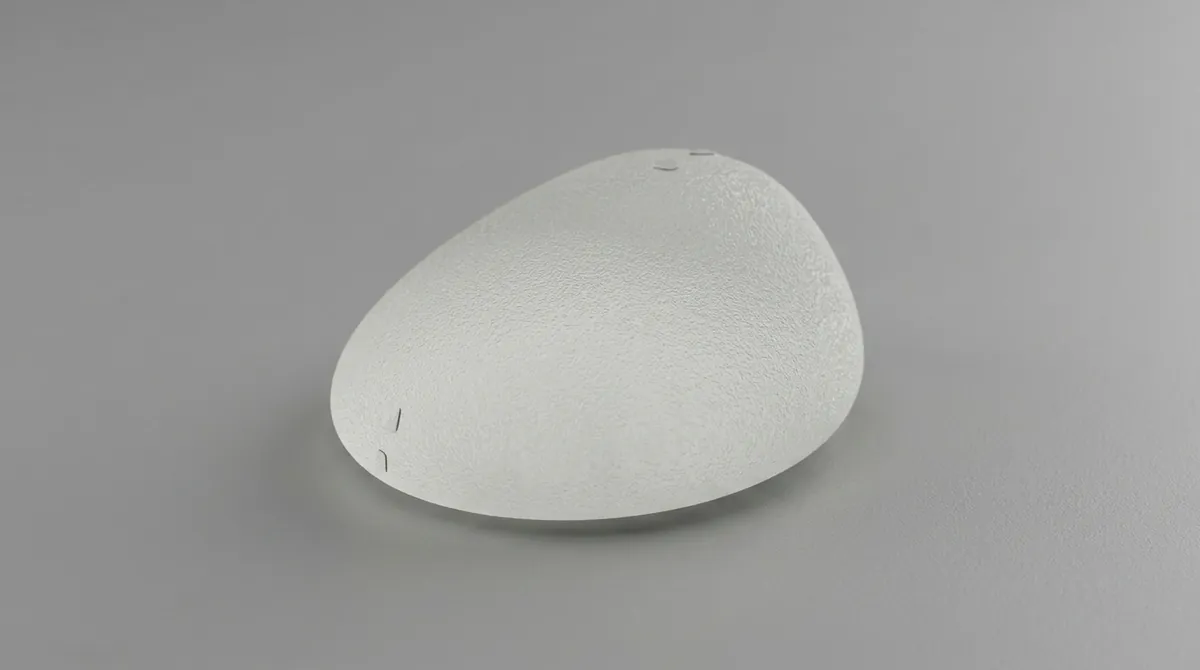
One of the most common questions at consultation is whether to choose round or anatomical (teardrop) implants. It is a decision that influences the final look, the feel, and even some long-term considerations — but there is an important truth to start with: neither shape is universally "better". The right choice depends on your anatomy, your goals and your surgeon's assessment, and a good surgeon can achieve excellent, natural results with either when they are used appropriately.
Round implants
Round implants are symmetrical discs — the same shape all the way around — and are the most widely used shape worldwide.
Advantages
- Add fullness across the whole breast, including the upper pole, which can read as natural or fuller depending on the profile and placement.
- Because they are symmetrical, rotation does not change their appearance — a practical advantage that removes one whole category of problem.
- Often softer in feel, as they can use softer cohesive gels.
- Generally lower cost and the most widely available.
Considerations
Some patients worry round implants always look "fake", but in appropriate placement and profile they very often look natural. The upper-pole fullness is controlled largely by profile choice.
Anatomical implants
Anatomical (teardrop) implants have more volume towards the bottom and a gently sloping upper pole, designed to mirror the natural shape of the breast.
Advantages
- Can give a very natural slope, particularly valued in slim patients with little natural tissue and in breast reconstruction.
- The shaped form provides control over the lower-pole contour.
Considerations
- They typically use firm, highly cohesive "form-stable" gel to hold their shape, so they feel firmer than soft round implants.
- Many have a textured surface to help resist rotation — relevant because texture is associated with the rare condition BIA-ALCL.
- If an anatomical implant rotates in the pocket, the breast can look distorted — a problem round implants simply do not have.
- Often higher cost.
How surgeons decide
Your surgeon weighs several factors when recommending a shape:
- Your existing tissue — very thin tissue or little natural breast may favour the controlled slope of an anatomical implant, or a round implant with fat transfer for cover.
- Your goals — whether you want upper-pole fullness or a more sloped, natural profile.
- Chest and breast shape, degree of sagging, and any asymmetry.
- Your feelings on feel, rotation risk, surface and cost.
The bottom line
Round implants offer fuller upper poles, a softer feel, no rotation concern and generally lower cost. Anatomical implants offer a controlled natural slope valued in specific situations, at the cost of a firmer feel, rotation risk and often texture and price considerations. Both can look excellent in the right hands — the key is an honest discussion with an experienced surgeon about which suits your body and goals. Compare also round vs ergonomic.
Frequently asked questions
Do anatomical implants look more natural than round?
Not necessarily. Anatomical implants give a controlled slope valued in slim patients and reconstruction, but round implants in appropriate placement and profile very often look just as natural — and avoid rotation problems. The result depends on technique and your anatomy.
What happens if an anatomical implant rotates?
Because anatomical implants are shaped, rotation in the pocket can distort the breast's appearance and may require corrective surgery. Round implants are symmetrical, so rotation does not change how they look.
Are anatomical implants more expensive?
Often yes. Anatomical implants typically cost more than round implants, and they may carry texture-related considerations. Your surgeon can explain the cost and trade-offs for your specific case.