Expert-led · Evidence-based · UK
The UK's Expert-Led Guide to Breast Implants
Breast implant surgery is one of the most researched cosmetic procedures in the world. Whether you are considering breast augmentation, implant replacement, implant removal or simply want to understand your options, Breast Implant Surgeon UK provides clear, balanced and evidence-based information to help you make informed decisions.
Why this website exists
A trusted knowledge centre, not a sales pitch
Welcome to breastimplantsurgeon.co.uk, an expert-led educational resource dedicated to helping patients understand breast implants and breast implant surgery. Unlike many websites that focus on promoting a single clinic or surgeon, every guide here is written to explain complex medical topics in plain English while remaining accurate and supported by current evidence wherever possible.
Explore the knowledge centre
Everything you need, organised by topic
Breast Implant Guide
Start here. A plain-English, evidence-based introduction to breast implants, your options and what the journey involves.
Explore Breast Implant Guide →Implant Types
Silicone, saline and everything in between. Understand how each implant is constructed and where it is used.
Explore Implant Types →Implant Shapes
Round, anatomical and ergonomic designs, plus the profiles that determine projection.
Explore Implant Shapes →Implant Brands
An impartial look at the major manufacturers supplying the UK market and how they compare.
Explore Implant Brands →Implant Placement
Over, under, dual-plane or subfascial — where the implant sits and why it matters.
Explore Implant Placement →Breast Implant Procedures
From first-time augmentation to complex revision, the surgical options explained.
Explore Breast Implant Procedures →Recovery
A realistic, week-by-week picture of healing after breast implant surgery.
Explore Recovery →Risks & Complications
Honest, balanced information on the recognised risks of breast implants — common and rare.
Explore Risks & Complications →Choosing a Surgeon
How to find a properly qualified, regulated breast implant surgeon in the UK.
Explore Choosing a Surgeon →Featured guides
Popular places to start
What Are Breast Implants?
The essential primer on construction, fill and surface.
Read guide →Implant TypesSilicone Implants
Why silicone gel is the most-used implant in the UK.
Read guide →Implant ShapesRound vs Anatomical
How shape influences the final look.
Read guide →Implant BrandsMotiva vs Mentor
An impartial comparison of two leading brands.
Read guide →Implant SizesChoosing Implant Size
Why “cc” is only part of the decision.
Read guide →RecoveryRecovery Timeline
A realistic week-by-week recovery picture.
Read guide →Understanding breast implants
More than a cup size
Breast implants are medical devices designed to increase breast volume, improve shape or restore fullness lost through pregnancy, weight loss, ageing or previous surgery. Modern implants usually contain a cohesive silicone gel within a durable silicone shell, manufactured in a range of widths, projections and shapes.
Choosing an implant involves far more than selecting a size. Surgeons consider chest width, existing breast tissue, skin quality, nipple position, body proportions and lifestyle before making a recommendation — with the aim of a balanced, natural-looking result that minimises the risk of complications.
Read: What Are Breast Implants? →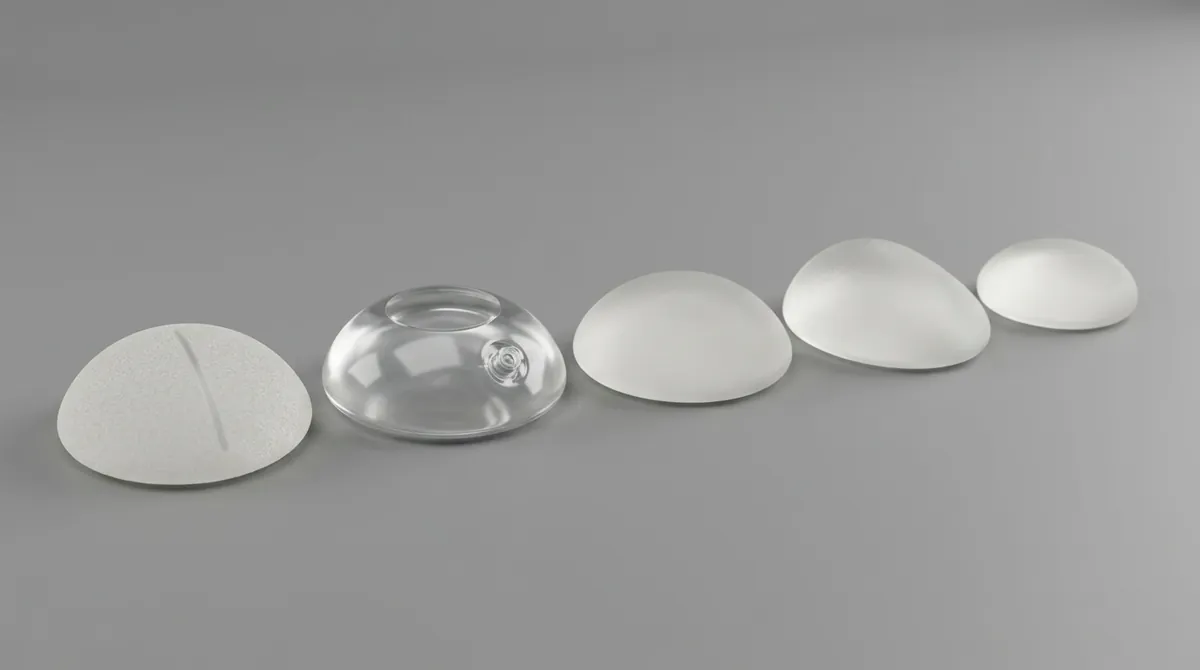
Risks & complications
Honest about benefits and limitations
Every surgical procedure carries potential risks, and understanding them is an important part of informed consent. Although most patients recover without significant problems, complications such as infection, bleeding, capsular contracture, implant rupture, rippling or the need for future revision surgery can occur.
We explain these topics objectively, including recognised rare conditions such as Breast Implant-Associated Anaplastic Large Cell Lymphoma (BIA-ALCL), so you can make informed decisions in partnership with your surgeon.
Explore Risks & Complications →
Frequently asked questions
Quick answers to common questions
Are breast implants safe?
Breast implants are regulated medical devices that must meet strict safety and quality standards before they can be used in the UK. Like any surgery, breast augmentation carries recognised risks, and certain rare conditions are associated with implants. Our guides explain the current evidence so you can weigh benefits and limitations with your surgeon.
How long do breast implants last?
Implants are not designed to last a lifetime, but there is no fixed expiry date. Many implants remain intact for well over a decade. The likelihood of needing further surgery increases over time, which is why long-term follow-up matters.
Do implants need replacing every 10 years?
No. The idea that implants must be swapped every ten years is a myth. Replacement is guided by clinical need — such as rupture, capsular contracture or a change in your goals — rather than a calendar.
Can I breastfeed after breast augmentation?
Many people breastfeed successfully after augmentation. The ability to breastfeed can be affected by the incision used and your individual anatomy, so it is worth discussing at consultation.
Will implants affect mammograms?
Implants can obscure part of the breast on a standard mammogram, so additional views or imaging may be used. Always tell the radiographer that you have implants.
Should implants go over or under the muscle?
Both placements have advantages depending on your tissue, body type and goals. Our Implant Placement guides explain over-the-muscle, under-the-muscle, dual-plane and subfascial positioning in detail.
Researching your options?
Begin with our complete, plain-English guide to breast implants — or learn how to find a properly qualified UK surgeon.