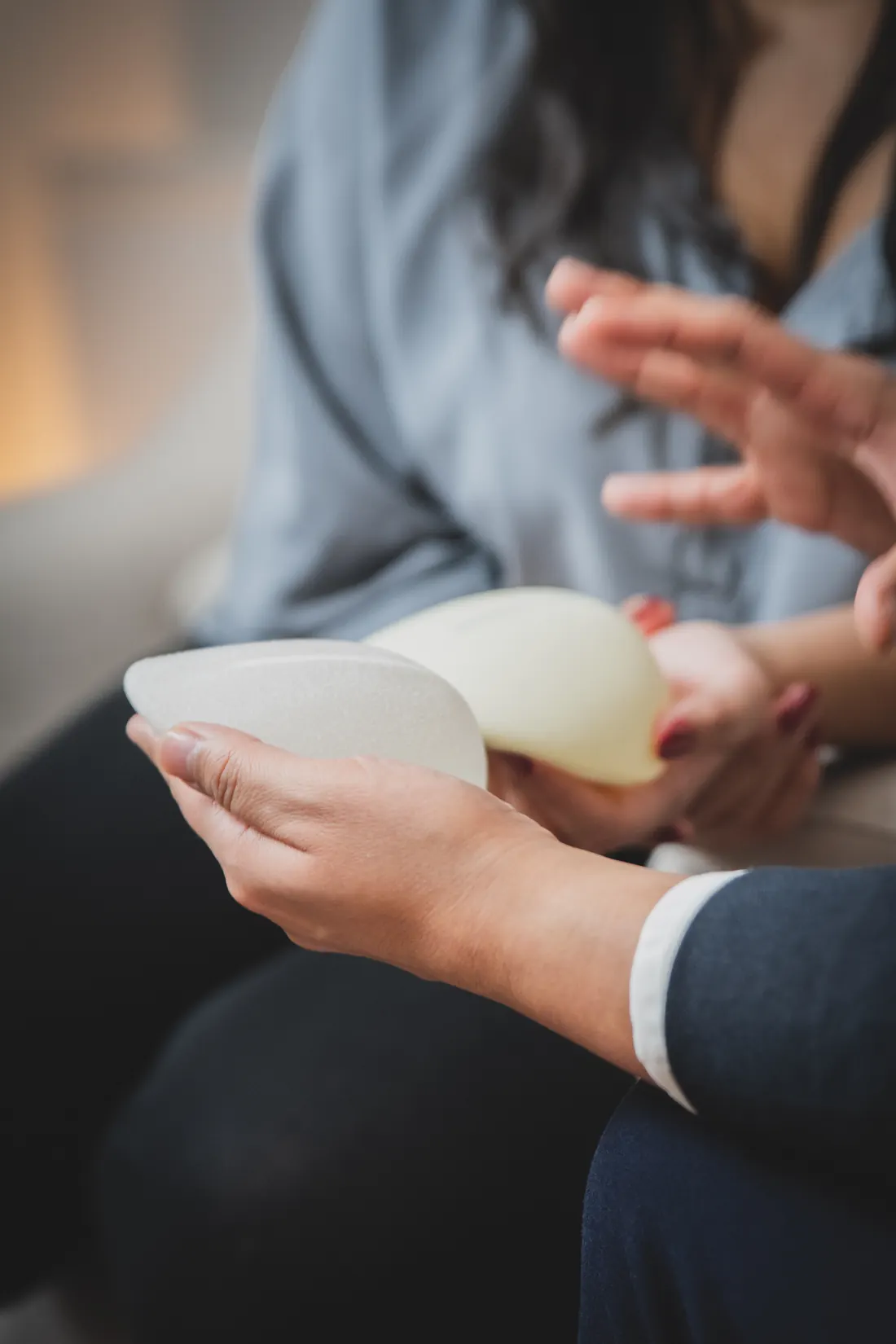
If there is one appointment to get right in the entire breast implant journey, it is the consultation. This is where your goals are translated into a surgical plan, where risks are explained, and where you assess whether a surgeon is the right person to operate on you. A good consultation is educational, unhurried and honest — it should feel like a careful discussion, not a sales pitch. Approaching it well, and ideally having more than one, is one of the best investments you can make in a safe, satisfying result.
How to prepare
A little preparation helps you get clear answers and make a confident decision:
- Clarify your goals. Note what you want to achieve, and bring reference photos of looks you like — and dislike.
- Gather your history. List your medical history, medications, allergies and any previous surgery (and, for revision, your original implant details).
- Write down your questions so nothing is forgotten in the moment — use our questions to ask.
- Verify the surgeon beforehand on the GMC Specialist Register.
What happens during the consultation
A thorough consultation typically includes:
- A discussion of your goals and motivations, and your medical history.
- An examination and measurements of your breasts and chest — including base width, tissue thickness, skin quality, nipple position and any asymmetry.
- A tailored recommendation on implant type, size, profile, placement and incision, with the reasoning explained.
- Sizers, 3D imaging or before-and-after photos to help you visualise the likely result.
- A clear explanation of the risks, as part of informed consent — not glossed over.
- A discussion of cost, aftercare and the revision policy.
Questions worth asking
- Are you on the GMC Specialist Register for plastic surgery, and will you personally perform my surgery?
- How often do you perform this operation, and revisions?
- Which implant type, brand, size and profile do you recommend for me, and why?
- What placement and incision, and what are the trade-offs?
- Where will you operate, and is it CQC-registered?
- What are the specific risks for someone with my anatomy?
- What does the price include, and what happens — clinically and financially — if I need revision?
- How is follow-up handled, and how do I reach you with concerns?
Red flags to watch for
Be cautious if you encounter any of the following, and consider it a reason to pause:
- Pressure to decide quickly, or time-limited discounts.
- Financing pushed before you have made up your mind.
- Reluctance to discuss risks, or vagueness about who will operate and where.
- Unverifiable credentials, or a surgeon not on the Specialist Register for plastic surgery.
- No cooling-off period.
See our full list of red flags.
After the consultation
Take a cooling-off period to reflect — this is major, often irreversible surgery, and there is no need to decide on the day. It is normal and wise to consult more than one surgeon before deciding; comparing how each assesses your case, explains the options and discusses risk helps you choose with confidence. A second opinion is especially valuable for revision or complex cases. When you feel fully informed and comfortable with your surgeon, you are ready to proceed.
Frequently asked questions
How many consultations should I have?
At least one thorough consultation is essential, and it is wise to have more than one — especially for revision or if you feel unsure. Comparing surgeons helps you make a confident, well-informed decision, and reputable surgeons support second opinions.
Is there usually a fee for a consultation?
Some surgeons charge a consultation fee and some do not; it varies. Check in advance. Either way, prioritise the quality and honesty of the consultation over whether it is free — a rushed 'free' consultation that feels like a sales pitch is a warning sign.
Should I feel pressured to book on the day?
No. A good surgeon offers a cooling-off period and never pressures you to decide immediately. Time-limited discounts or pressure to book on the day are red flags for this major, often irreversible surgery.